Showing posts with label Productivity. Show all posts

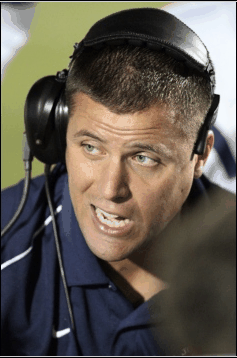
Why Jim Harbaugh Should Have Been In Fight Club

"The Things You Own End Up Owning You ...Advertising has us chasing cars and clothes, working jobs we hate, so we can buy things we don't need."

-  PG Version of Tyler Durden's quote in Fight Club 

He must chew really slow ...


Last week, I watched Minimalism on Netflix and listened to Ryan Nicodemus of "The Minimalists" on Jason Ferruggia's podcast.


It inspired me to write my own article on the topic, because I am a firm believer that less is always more.

The intent of this article is not to make you give away all of your possessions and go off the grid.

It is simply to help you remove some clutter from your life, so you can focus on what matters most and what brings you happiness.

My Minimalist Actions

I am going to begin this article by sharing some of the minimalist actions I currently practice. These examples should show you that you can practice minimalism and still live a very normal life.

Coaching Football

I coach the same linebacker drills every day and I never use cones, bags, shields or sleds.

Think of the time saved every practice by not having to "dress our area" or teach new drills to kids who could barely execute the old ones or remember our trips coverage checks.

That extra time is used towards relentless execution of the basics, which in my humble opinion, allow our linebackers to play aggressively and without hesitation when the lights are on.

Pop Quiz ... what is wrong with this tackle?

Clothing

For every new piece of clothing I buy, I force myself to get rid of an old one.

At the time of purchase, it really makes me think, "Do I like this blue Nike hoodie so much that I am willing to part with the black one?"

Books

I have the same rule for books as I do for clothing.

Every time I buy a new book, I throw an old one out.

This rule became very easy to enforce, as I refused to buy any additional bookshelves and my current ones were full.

Only the best books remain ...


Note: This type of limitation setting with space can be very effective far beyond books. The same can be done for drawer space for clothing or screen space on your phone for apps.

Social Media

I limit my social media usage to Instagram and Twitter 1x per week, soon to be 1x per month.


To be honest, I cannot remember one time that either of those apps has brought me joy. I usually leave a late night session of cyber-stalking feeling depressed and emotionally drained.

Note: This feeling comes even though I only follow about 35 people on Instagram and Twitter combined. I have no idea how people who follow 300+ people feel.

Information

I don't watch the news or read any newspapers.

While I read plenty of books, I limit myself to one non-fiction book at a time which will motivate me to take immediate action to improve my life or the life of others.

To me, information is useless unless you find a way to practice it.

For instance, what use would this article be if you read it and then never made any attempt to reduce the clutter around you?


Training

We follow the Holy Grail of Strength.

Enough said ...

How Far Should You Go?

As I mentioned eariler, this is article is in no way trying to persuade you to go "Full Minimalist".

Never Go Full Minimalist


Before taking any "minimalist" actions, you should think about "the why" and ask yourself the following questions before adding or removing something from your life.
  • Will this remove stress from my life or add value to it?
  • Will it allow me to spend more time doing the things I really care about?
  • Will it open up some free space in my mind or simply add more clutter?
  • How would my life really change if I did or did not have this?
My Personal Exceptions

If it doesn't add stress, but it does add value, there are certainly times when you can make exceptions to the minimalist philosophy.

Here are two of my personal minimalist exceptions.

Batman Comics

This is the only fiction reading I do. (Although, those who know me best would argue that I consider Batman to be the very opposite of fiction.)

To be fair, I only keep the graphic novels I think are great and I reread them frequently.

My Batman Collection


My "Truck"

I drive a very, very large SUV.

To once again be fair, I need it to carry around our training gear. Try getting a prowler, a sled, a farmer's walk pistol and 400+ pounds of weight into a Prius.

Also, you need a US Army Abrams battle tank to drive through and around the landmines we graciously call potholes in Staten Island.

Welcome to Staten Island ...

I think my Lincoln Navigator is a nice compromise!

How Should You Start

Small ...

Focus on one thing at a time and don't tackle the entire thing all at once.

For example, I would not recommend trying to remove clutter from social media, your workout program, and your clothing all at the same time.

I would pick one of those things and try to break it down into the smallest subset possible.

For example, if I decided to focus on clothing, I would then chose to remove clutter from one drawer as opposed to the entire dresser.


If you try to go too big, you could get overwhelmed and give up immediately.


The Biggest Side Benefit

To me, the biggest side benefit of removing clutter is eliminating mental fatigue. There are only so many decisions you can make and so many problems you can solve in a day.

This is exactly why a guy like Jim Harbaugh wears the same outfit every day.


Do you seriously think he could come up with this formation if he spent his mornings debating what to wear?


Digging for your car keys in a junk drawer or trying to find a shirt that's not wrinkled in a stuffed closet is a total waste of your precious mental energy.

Remove the clutter and you can get the clarity of mind back to make some really effective decisions in your life.


Wrap-Up

Remember, information by itself is useless.
Don't just read this article and immediately go trolling Instagram for the next two hours.

Find something that is giving you stress and immediately make a plan to slowly remove the clutter.

If you make good progress or have any great tips, please share them below.

We can all benefit from learning from each other.


My Trip To Pulaski Academy ... It's More Than Just About Football

"I learned a valuable lesson in life, you never miss a workout for anybody.
My staff and I are heading down to the gym. You can train with us or just watch."

T-Nation

When Coach Kelley gave me this option, my body immediately made the choice to just watch. Over the past 8 hours, I had been on 2 planes, a bus, a train and multiple car rides in order to learn from the "Coach Who Never Punts" at Pulaski Academy in Little Rock, Arkansas. I was also extremely sore from setting a few PR's the day before.

Nevertheless, when a jacked up coach whose team won 5 state championships asks you to train with his staff, you don't say "No".

Missing a lift is clearly not an option to this guy

That would make me as soft as the Arcadians who bailed on the Spartans in 300 when they found out the secret trail was compromised.


"Sorry Leonidas, our legs are sore. Catch us after the deload week."

Even though I hobbled through my training session, sore and travel weary, I soaked it all in knowing ... this trip was more than just about football.

Pulaski Academy Bruins Training Facility

The Coach Who Never Punts

For those of you that don't know, Coach Kevin Kelley is the head high school football coach of Pulaski Academy. The media has dubbed him as "The Coach Who Never Punts" because, as you can probably guess, he never punts.*


To me, giving him this label is a bit of an understatement and is definitely selling him short.

Not only does he not punt, he also does not do any of the following:

  • Kick off deep
  • Return Punts
  • Have long practices
  • Have long meetings
  • Sprint After Practice
  • Arrive Early for Games
  • Practice 5 days a week
Even though this seems like a recipe for disaster, this contrarian approach actually paves the way for success. 

Being a contrarian myself, I am not going to retell the same stories of Coach Kelley and Pulaski Academy that you can easily find in 10 seconds with a Google search or by clicking HERE.


Rather, I am going to tell you how all of the lessons I learned at Pulaski Academy with Coach Kelley were way more than just about football.

Let the fun begin.

1. Use Data to Make Decisions

"If I were given 1 hour to save the planet, I would spend 59 minutes defining the problem and 1 minute saving it." - Albert Einstein


Every single day, people make very bad decisions because they do so based on emotion rather than logic. It is why people are in the wrong jobs, have the wrong girlfriend, and buy things they don't need with money they don't have.

To be effective at anything, you need to know the real problem before you start implementing a solution. Otherwise, you are doing a great deal of unnecessary work for a problem that doesn't exist.

To know the real problem you need to analyze the data and see where the pain points are.

Coach Kelley's decision not to punt was based primarily on data. Our emotions will tell us that a 30 yard swing in field position will have a great impact on your opponent scoring. On the contrary, the data shows that retaining possession of the ball (by getting a first down) far outweighs the yardage gained by punting ... if you are even lucky enough to get the punt off at all.


2. Know "The Why"

During my visit, I asked Coach Kelley to name a few books he read that made a significant impact on him.

Of the books he named, 3 of them involved understanding "the why" behind human behaviors and emotions.
Those books were "Why We Make Mistakes", "How We Decide" and "Think Like a Freak".


It immediately became clear to me that he simply didn't care that his players made mistakes. He wanted to know "why" they made the mistake.

When you know "the why", you put yourself in a much better position to put in an effective solution.

What is the simplest way to figure out "the why"?

Just keep asking "why" until you can't go any further.


3. Discipline is Freedom

I picked up the phrase "Discipline is Freedom" from Jocko Willink and Leif Babin in Extreme Ownership. It essentially means that the more disciplined you are in the little things, the more freedom you have to be creative in the big things.


For Coach Kelley and his staff, it appears they have created some very simple rules for run blocking and pass protection. Those simple rules allow them to run multiple offensive formations without confusing their athletes, but at the same time, create a nightmare for opposing defenses.

For this same reason, it is why I leave my car keys in the same spot every night, I eat the same thing for breakfast every morning, and I put my feet in the same exact spot every time I deadlift.


By not having to focus on the small things, I can devote more time and attention on the big things.

4. Time and Attention: Our Most Valuable Resource

Contrary to popular belief, money is not our most valuable resource. Money is renewable and can often be regained without too much effort.

On the flip side, we can never get back our time and our time is meaningless without attention.


Coach Kelley clearly understands this point. His practices are only 1.5 hours (as opposed to 3 hours) and he only practices 4 days a week (as opposed to 5).

Over a 10-week period, this would mean he practices over 50% less than his competitors (who he routinely beats).

If you had to guess, who struggles more to keep his players attention ... the coach who practices 150 hours a year or the coach who practices 60 hours a year?

To take this even further ... which coach will have players that are more fresh during the playoffs?

5. Focus on the Important

"Perfection is not achieved when there is nothing left to add, but when there is nothing left to take away." - Antoine de Saint-Exupery

The beauty of not punting or returning punts is that you no longer have focus on those parts of the game. Not only does it reduce practice time, it also reduces the time required to watch film and develop a special teams game plan.

Because he removed so many facets of the game, Coach Kelley is able to have the short practices mentioned above and keep the attention of his players. While this may seem like an obvious side effect, it really isn't.

The average person would simply add other things to fill that void in practice time. By keeping the practice time at 1.5 hours, Coach Kelley does not allow this to happen. This is often referred to as Parkinson's Law.


Parkinson's Law is the reason why college students get the same grade on a term paper, regardless if they start it the first day of the semester or the last day of the semester.

By implementing Parkinson's Law, you are forced to only focus on the important, as there is no time left for the unimportant.

How do you know what's important?

You use the data (see point #1).

6. Life is about Balance

In my very short time at Pulaski Academy, I could see Coach Kelley had a very well balanced life. Not only did he have time to educate me for a few hours, he also ...
  • found time to watch his daughter during her field day.
  • found time to coach his athletes on the field.
  • found time to train.
  • found time to bond with his staff and players
While it is not 100% related, it definitely reminded me of the saying listed below about the 3 hobbies you should pursue. 

To me, if you can pursue all 3 hobbies and still include your faith, family, and friends, you have a well balanced life.


7. Invest in Yourself

To go and learn from Coach Kelley, I had to make an investment. Not only did I have to pay for a flight, a rental car, and a hotel room, I also had to take 2 days vacation from work and spend time away from my family.

Nevertheless, it was an investment that I know will help me as a football coach, a strength trainer, and in my day job in Corporate America.

For those of you who have made it this far in the blog, think about this the next time you complain about a gym membership fee, early training sessions or the price of high quality protein.

If you want to be great, you need to invest in yourself.

Wrap-Up

I would like to wrap this blog up by saying thank you to Coach Kelley, his staff, his school and his team for welcoming me to their facility and to educate me on their football philosophies.

It was truly appreciated by me and our St. Peter's Eagles staff back in Staten Island.

You guys are top notch and deserve all the success you have and will achieve,


* To say they never punt may be a bit of a lie. They actually do punt if they have a large lead and they are trying not to run up the score.

The 4 Hour Football Coach

In addition to running Advanced Training, I also coach high school football for St.Joseph by-the-Sea in Staten Island, New York.

Me in Action

As with everything I do in life, I take a great deal of pride in being able to run a defensive practice more efficiently and effectively than anyone else in the world.

For those of you that are not smart, that means we get the most done in the shortest amount of time possible.

Is efficient the same as effective?

That is why I titled this article "The 4 Hour Football Coach", out of respect for my favorite book, "The 4 Hour Workweek" - the Holy Grail for people who want to be both efficient and effective.


Along with our school's head coach (Coach Clark) and offensive coordinator (Coach Hensch) we have proven that you don't need to be on a football field 6 hours a day in order to get results on game day.

If fact, if you did things perfectly, you would only need to be on the field 4 hours per week.

AAA Playoff Win for the Vikings

I am dedicating this article to the four newest members of our football staff, all of which were legends at Advanced Training - Rob Mulligan, Billy Blanco, Steve Roman, and Pete Amerosi.

They have only been with the staff a few weeks, but it is clear they are following our 3 simple rules to being a 4 Hour Football Coach.


1. Live and Die by the Pareto Principle:

Vilfredo Pareto was an Italian economist in the 1800's who introduced the concept of the 80 / 20 principle.


To keep it simple, his work helped demonstrate that 20% of your efforts account for 80% of your results.


So how does this pertain to football?

  • 20% of the plays you practice account for 80% of your yards gained.
  • 20% of your players make 80% of the plays
  • 20% of the drills you practice make 80% of the impact on game day.
With that, why spend so much time on the other 80%?

As a defensive coach, should I really spend two hours focusing on a trick play a team ran one time in 1987 that gained 5 yards?

Or .... should I focus on the 5 plays in their playbook that totaled 300 yards last week?

Should I try to game plan against the TE who caught one pass in his junior year?

Or ... should I try to stop their slot receiver who scored 16 touchdowns this season?

Stop putting so much time into your practice on the non-value added 80%. It only distracts you from getting better at the 20% that really matters.


2. Leverage Parkinson's Law

Parkinson's Law states that the less time you have to do something, the better you will be able to limit yourself to the tasks that provide real results.


In the football world, this means creating a schedule that is so short, that you don't have time to add in non-value added drills.

If your individual period is only 10 minutes, are you really going to waste 5 of those minutes having your d-line work on man coverage?

In reality, having less time almost always leads to equal or better results.

Why?
Because it stops you from focusing on the non-value added 80%. (See point #1)

Think I am crazy?

How many times have you started and finished a term paper months before it was due?

How many times have you woke up 20 minutes late for school / work and still got there on time?

How did the NFL teams play so well after their strike in 2011 cut their preseason practice time?

How can your team take the field on a Friday night after playing its last game on a Sunday?


3. Leave Creativity for What's Important

People that are ripped generally eat the same food for breakfast and lunch everyday.

The only meal they add variety to is dinner, as that is the meal where they can spend the best quality time with family and friends.

No self respecting person catches up with a college roommate over a box of Lucky Charms.


What does this mean in the football world?

It means don't approach every practice with a new set of drills.

Teaching a drill takes time.

Having a high school kid learn and execute that drill takes even longer.


Thanks to Rule #2 (Parkinson's Law), this is time you don't have.

Go into your season with a standard set of drills.


Use the remainder of your season to dominate those drills via coaching and repetition.

What if your kids get bored?

Have a shorter practice.

What if your drills stink?

You should have followed Rule #1 (The Pareto Principle) in the off-season and focused on drills that add the most value.

Where should you spend your time with creativity?

Game Plans ...


Blocking, tackling, pursuit, and footwork do not change from week to week, but opposing teams do.

A high school kid can only remember so many things.

Why take up that space in their brain with a new tackling drill, when you have to prepare for the Single Wing or the Veer Option?

Wrap-Up

With each of these 3 points, you must remember there are two things that are not infinite.

  • Time
  • An athlete's attention span
The more time you spend on a field, the less an athlete will actually pay attention to you.

If you follow my 3 rules, you are guaranteed to have the undivided attention of fresh football players.

Even if a coach does not know the recipe for success, he should know the one for failure...

Having players that are tired and confused.

5 Things You Should Do Every Day

I don't care if it is your max effort day, your cardio day, your cheat day, your deload day, or your mother's birthday.

There are 5 Things That You Need To Do Every Day so you can stay healthy, jacked up, and mobile.

1. Perform Self Myofascial Release (SMR)

How do you expect to move big weight if you are always sore and stiff?

Perform SMR with a foam roller every night right before you go to bed.
Not only does it help your muscles the next morning, it will also help you sleep better that night.


The best $20 you will ever spend.

2. Perform Hip Hinges

Think about all of the powerful movements you perform that involve some form of hip hinge.

The hang clean, the snatch, the vertical jump, the squat ....

In each one of these movements, the #1 limiting factor is the athlete's ability to hinge his hips backward properly.

The best way to improve this limiting factor --- perform some form of hip hinge every day.

My personal favorite hip hinge movement is light load good mornings.

Hip Hinge with a Good Morning

3. Drink a Gallon of Water

It keeps you hydrated.

It keeps your organs healthy.

It helps you control body fat.

Enough said.
Don't Be Ashamed To Do This At Work

4. Actively Work On Your Posture


Make a concerted effort to walk with your chest out, your shoulders back and your head held high.
I would even go so far as to make the same effort while you are sitting down.

Why?

Good posture helps you breathe better, it reduces stress on your back, it helps improve self-confidence, and it reduces neck pain.

Most importantly, it helps strengthen your core and upper back.

In turn, this will help you look leaner, lift more, and not get mistaken for the Hunchback of Notre Dame.

"I Always Slouched As A Boy"
5. Dorsiflex Your Feet

Even me, the guy who advocates training with minimal footwear, must perform additional dorsiflexion throughout the day.
              
While I wear Vibram Five Fingers or Nike Minimus in the gym, I spend a good portion of the rest of my day walking around a chemical plant in construction boots.

To compensate for that, I will actively work on performing dorsiflexion while I am sitting at my desk or watching TV with my wife.

If your life is anything like mine, I recommend you do the same.


Challenge

While each of these things sound simple, I highly doubt that any of you are actively doing any of these things every single day.

For the next week, I challenge you to pick one and do it every day.

After the 7th day, post a comment and let me know how much different you feel and look.
(Make sure you change nothing else but this one thing.)

I guarantee you will see major results.

Now ... imagine what it will be like when you do all 5.